


Functional Lab Testing: Identifying and Rebuilding Under-Resourced Hormones

Functional lab testing can reveal when hormones, metabolism, and the nervous system are under-resourced — and why rebuilding with nourishment and alignment matters more than force.
What Labs Actually Show Us — and How We Rebuild
If you’ve ever been told your labs look “normal,” yet you still feel exhausted, bloated, anxious, hormonally off, or disconnected from your body — this post is for you.
One of the most common patterns I see in my practice isn’t a single diagnosis or a dramatic lab abnormality.
It’s something quieter — and often misunderstood.
Under-resourcing.
Being under-resourced isn’t about effort; it’s about how the body adapts when demand outpaces support. That story often shows up across deeper, more comprehensive testing — even when you’ve been told everything looks normal.
This post walks through what under-resourcing looks like on labs — and how we actually rebuild with intention from that place.
How Under-Resourcing Shows Up in Practice
Under-resourcing rarely starts with a lab result.
It usually starts with how you feel.
In practice, it often shows up as symptoms or diagnoses that feel disconnected at first — or are treated as separate issues — but are actually linked by the same underlying pattern.
Common examples include PCOS, acne, IBS, infertility or secondary fertility challenges, anemia, or hypothyroid patterns. These conditions are not where the work stops — they’re information. They offer important clues about how and why the body arrived where it is.
This is where our work at Liv Nourished begins.
Your symptoms matter.
They’re real.
And they’re meaningful.
But we don’t stop at treating them at face value.
Instead, we do two things:
A. We get clear on why your symptoms are there.
Using advanced functional testing, we look for patterns across hormones, metabolism, stress physiology, immune resilience, digestion, and nutrient availability — often noticing subtle or repeating signals rather than one dramatic red flag.
B. We build an aligned, personalized roadmap to rebalancing your body.
One that’s informed by your data, your physiology, and your current capacity — not just standard treatment focused on a single symptom or diagnosis.
This approach matters because under-resourcing doesn’t always scream on labs. More often, it whispers. You may see results that look “normal” in isolation, but tell a very different story when viewed together.
When we work from that bigger picture, we’re not just aiming for symptom relief — we’re reducing the likelihood of the same imbalances expressing themselves elsewhere over time.
In this work, data drives direction. What allows you to see progress with your symptoms isn’t more effort — it’s the right direction.
And one of the most common stories that emerges from this level of testing is under-resourcing.
Under-Resourced Isn’t Just a Feeling — It’s a Physiological State
Under-resourcing occurs when the demands placed on the body — stress, work, restriction, training, illness, caregiving, or perfectionism — consistently outweigh the body’s available energy, minerals, and capacity for repair.
In response, the body adapts.
It conserves.
And that conservation becomes clear when we look at the full picture your labs tell together.
What “Under-Resourced” Looks Like on Labs
These patterns rarely appear in isolation. They tend to cluster across systems.
1. Energy Availability & Metabolic Signaling
Low leptin, low blood glucose, and low insulin often reflect chronic under-fueling or inconsistent energy availability, even in women who eat “well” or prioritize health.
Leptin and insulin are key signals of energy sufficiency. When both are low, the body receives the message that resources are limited — and it adjusts accordingly by prioritizing conservation over repair.
Low vitamin D frequently travels alongside this pattern, reflecting reduced nutrient availability, altered absorption, or long-term physiological demand exceeding supply. While vitamin D is often discussed in isolation, it plays a meaningful role in metabolic signaling, immune function, and hormone regulation.
Together, these signals influence:
- Ovulation and progesterone production
- Thyroid signaling and metabolic flexibility
- Cortisol output and stress resilience
- Gut integrity and immune function
This is a biological response to perceived scarcity — and one we can support once we understand it.



Many women describe themselves as simply “tired.”
But tired isn’t specific — and it doesn’t tell us where to start.
Advanced testing helps us understand what kind of tired your body is experiencing, and how stress physiology is adapting when resources are limited.
In under-resourced bodies, we commonly see:
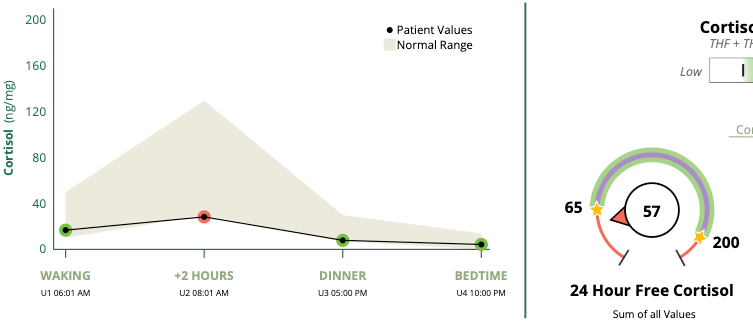
- Low total cortisol output, where energy feels depleted or flat
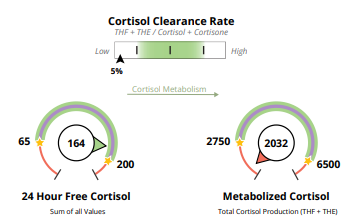
- Elevated cortisol with poor clearance, where stress stays “on” and the body struggles to downshift
- Imbalanced cortisol rhythms, where cortisol is high or low at times of day it shouldn’t be
Each pattern reflects a different adaptive response — and feels different in the body.
When cortisol signaling is dysregulated, the nervous system shifts into protection mode. Energy is directed toward managing stress, often at the expense of digestion, hormone production, immune resilience, and repair.
Because the adrenals are resource-intensive, chronic stress increases demand for fuel and minerals — often pulling from other systems over time. This is how under-resourcing becomes a full-body loop.
Your labs help us see whether fatigue is driven by too little cortisol, too much cortisol without clearance, or a mismatch between stress load and available support — allowing us to respond with precision rather than guesswork.
3. Thyroid Adaptation, Not just a healthy thyroid or hypothyroidism
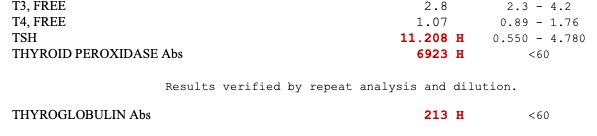
Many women are told their thyroid is “fine” — or are guided toward medication — based primarily on TSH alone. While TSH can be useful, it only tells us a small part of the story.
When we look more deeply, markers like low free T3, low T4, elevated thyroid antibodies, and high reverse T3 often reveal how the thyroid has been adapting in response to prolonged stress or limited resources.
In an under-resourced state, the body may:
- Down-regulate metabolic output to reduce overall demand
- Shift toward reverse T3 as a way to conserve energy
- Reduce conversion to active thyroid hormone to protect against further depletion
In these cases, increasing stimulation alone rarely resolves symptoms. Progress comes from addressing the upstream demands driving that adaptation so thyroid signaling can normalize with adequate support.

4. Reproductive Hormones & Luteal Support
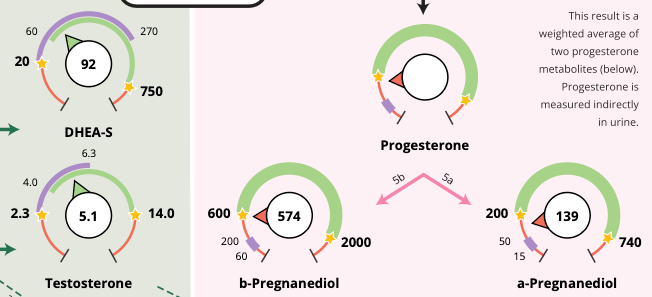
Progesterone is energetically expensive to produce and highly sensitive to stress and fuel availability. When your progesterone is low- we don’t need to give your more progesterone. We need understand why and support your system to start making more of your own.
Low progesterone often reflects:
- Chronic stress signaling
- Inadequate energy availability
- A body prioritizing survival over reproduction
This can show up as short luteal phases, PMS, anxiety, sleep disruption, or difficulty conceiving.
This pattern reflects coordinated adaptation across systems. When progesterone is low, we often also see low DHEA-S, variable testosterone, and disrupted thyroid signaling — interconnected shifts rather than isolated findings.
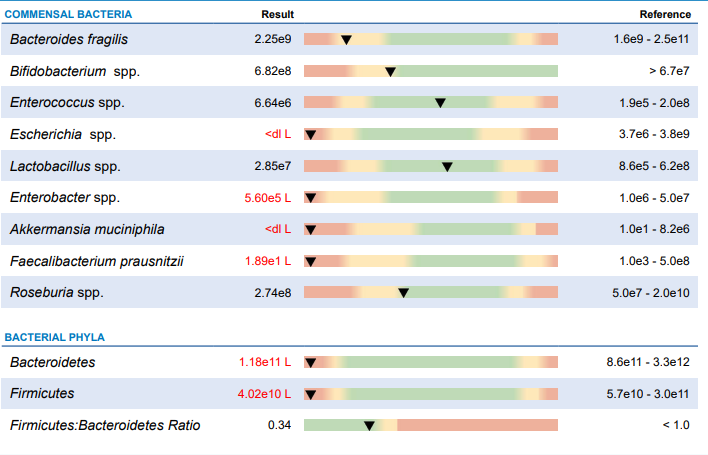
5. Gut Ecology & Immune Signaling: Low Beneficial Bacteria + Low sIgA
Two patterns I see repeatedly in under-resourced women are low beneficial bacteria and low gut immune signaling (sIgA) — and they often show up together.
Low beneficial bacteria are frequently framed as a gut problem.
In practice, they’re often a resource and regulation problem.
Many women don’t actually know what’s happening in their microbiome, yet they’re taking probiotics — sometimes several. I review a high volume of comprehensive stool tests each week, and one thing is consistently clear: stress load, daily routines, and how (and whether) someone is eating meaningfully shape gut ecology.
At the same time, sIgA offers a window into immune capacity at the gut lining. Low sIgA reflects an immune system under sustained demand, reallocating resources elsewhere.
Chronic stress, restriction, overtraining, illness, or prolonged gut protocols can all suppress sIgA. When that’s the case, layering more antimicrobials, supplements, or interventions often slows progress rather than supports it.

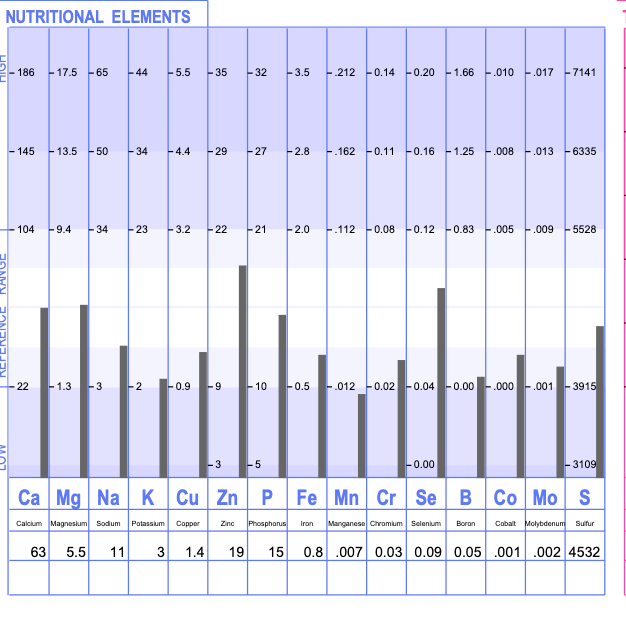
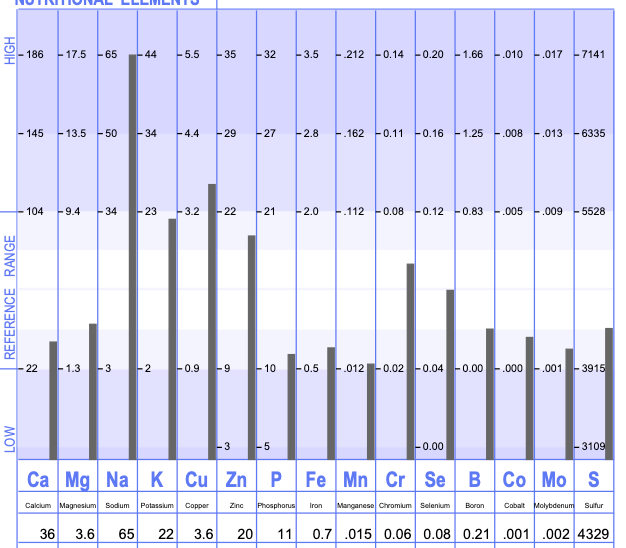
7. Mineral Depletion & Imbalance (HTMA)
Minerals are foundational to:
- Adrenal signaling
- Blood sugar stability
- Thyroid conversion
- Hormone production
- Nervous system tone
Low mineral levels and imbalanced ratios on HTMA are among the clearest indicators of long-term under-resourcing.
Without mineral sufficiency, the body simply can’t respond — no matter how advanced the protocol.
How We Use Testing to Create Direction
In this work, testing creates direction.
Advanced labs help us understand why symptoms are present and where the body is constrained. They show us how demand and resources are interacting and where support will create the most meaningful shift.
That clarity allows us to move intentionally and build a plan that addresses the drivers beneath symptoms rather than circling the symptoms themselves.
Rebuilding Capacity Starts with Re-Resourcing
Across under-resourced patterns, one foundation consistently matters: eating enough.
Rebuilding capacity begins with:
- Adequate energy and carbohydrates
- Consistent meals
- Mineral and electrolyte intake
- Hydration, sleep, and daily rhythms
These foundations support hormone signaling, stress physiology, digestion, and immune function. When supply matches demand, systems communicate more clearly and progress holds
Your First Place to Start
Because under-resourcing shows up so frequently, we’ve updated the Under-Resourced Woman Meal Guide to support this physiology.
This guide helps you:
- Stabilize blood sugar
- Increase usable energy and minerals
- Support hormone and stress signaling
It serves as a starting foundation you can build from.
👉 [Download the Under-Resourced Woman Meal Guide]
If You Are Ready for Personalized Direction
If you’re ready for personalized direction, you can book a Clarity Call to explore together how testing and aligned direction can support your healing journey. This is a space to talk through your full picture, my clinical perspective, and identify whether this feels like the right fit.


