


Healing hypothyroidism naturally
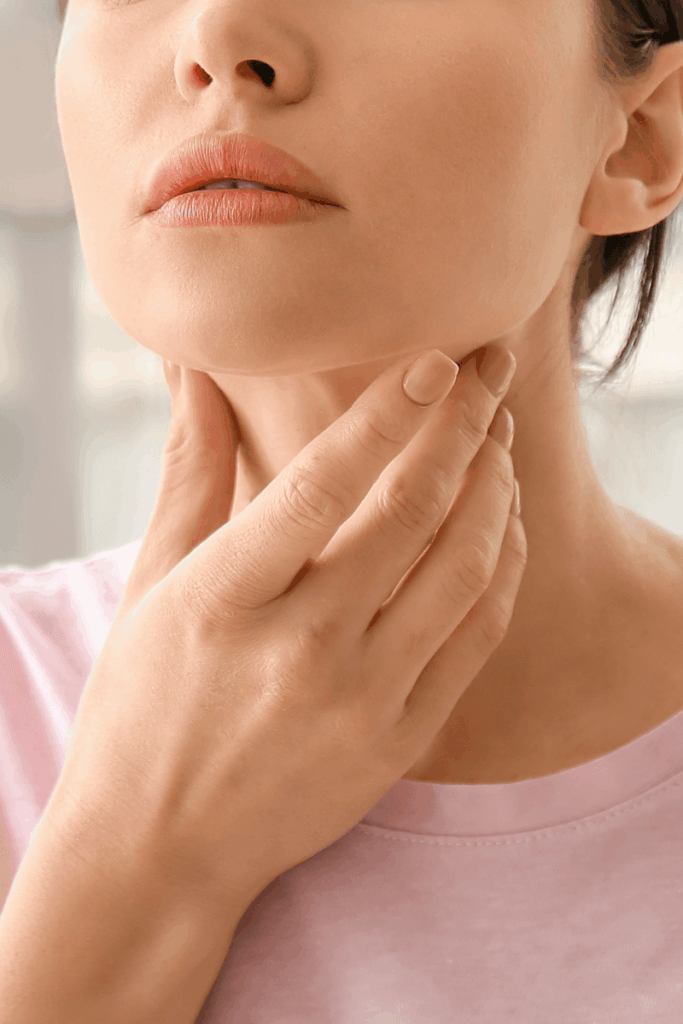
Beyond Synthroid: A Holistic Approach to Healing Hypothyroidism Naturally
Let’s have a real conversation, friend to friend—because this topic is way too important to be brushed off or boiled down to “just take your meds and move on.”
Whether you’re wondering if your thyroid might be underfunctioning or you’ve already been told something’s off, I want you to know this: the conversation doesn’t stop with a diagnosis. And it definitely doesn’t end with a prescription.
In my practice, I see women every single day who are still dealing with low energy, stubborn weight, mood swings, gut issues, and fertility struggles—even after starting medication like Synthroid. That’s because thyroid health is nuanced, and there are often underlying reasons your thyroid got to this point in the first place.
So yes, it’s valuable to get a full thyroid panel (which I’ll outline below) and sometimes a thyroid ultrasound to assess the structure of your gland. But when dysfunction is identified, true healing asks for more.
We have to ask: Why is your thyroid struggling? That’s where things like nutrition, lifestyle rhythms, immune health, and mineral status come in. These are the pre-requisites your thyroid needs to function well—things we often overlook.
And when autoimmunity is involved (as it often is with Hashimoto’s or Graves), we also need to explore how your immune system, gut, and environment may be influencing your thyroid. This is where advanced testing—like HTMA, GI testing, urine iodine, or even mold and toxin panels—can offer important insights.
This blog is your starting point for just that. We’re diving into:
- Awareness—what the thyroid actually does and how to know when it’s struggling
- Empowered choices—what labs, signs, and symptoms to explore
- Low-hanging fruit—simple but powerful changes to start supporting your thyroid today
You deserve to understand what’s really going on in your body—and I’m so glad you’re here.
What Your Thyroid Actually Does
Your thyroid is a butterfly-shaped gland located in your neck, and it’s the powerhouse behind your metabolism, energy, body temperature, digestion, cycle regularity, fertility, and more. It produces two key hormones—T4 (inactive) and T3 (active)—that regulate how fast or slow your body runs.
These hormones affect everything from how your body converts food into energy, to how warm your hands and feet feel, to whether or not you ovulate each month. It’s no wonder that when your thyroid slows down, you feel it everywhere.
Essential Nutrients for Thyroid Function
Your thyroid doesn’t work in isolation—it relies on a symphony of nutrients to produce hormones, convert them into usable forms, and get those hormones into your cells. Here’s a closer look at the key players:
- Iodine: Essential for making thyroid hormones—T4 contains four iodine molecules and T3 contains three. Without enough iodine, your thyroid literally can’t produce hormones. It’s that foundational.
- Selenium: This trace mineral activates thyroid hormones by converting T4 to the more active T3. It also acts as an antioxidant, protecting the thyroid from damage, especially in autoimmune thyroid conditions like Hashimoto’s.
- Zinc: Necessary for both hormone production and conversion. Zinc also plays a role in the function of the hypothalamus and pituitary—two brain centers that regulate thyroid signaling.
- Iron: Required for the activity of the enzyme TPO (thyroid peroxidase), which is responsible for making thyroid hormones. Low iron can lead to sluggish production and symptoms of hypothyroidism.
- Copper: Helps regulate iron metabolism and plays a supporting role in thyroid hormone production and cellular energy. Copper is also needed for proper immune function, which ties into autoimmunity.
- Magnesium: Powers the sodium-iodide symporter, a protein that transports iodine into thyroid cells. It also helps reduce inflammation and supports stress response—both of which can impact thyroid function.
- Potassium: Supports the movement of thyroid hormone into the cells where it can be used. Without proper intracellular potassium levels, you might have sufficient hormone in your blood—but still experience symptoms.
- Vitamin A (Retinol): Activates thyroid hormone receptors inside cells and helps convert T4 to T3. It also supports immune balance and healthy mucosal tissue in the gut (key in autoimmune cases).
- Vitamin C: Supports adrenal health and helps recycle antioxidants that protect the thyroid. It also aids in iron absorption—important for thyroid hormone synthesis.
- Vitamin D: Plays a regulatory role in the immune system and inflammation, and has been shown to support TSH regulation and antibody balance in Hashimoto’s.
If you’re under-eating, over-exercising, or dealing with gut issues, these nutrients can easily become depleted—further impacting your thyroid.
Getting these nutrients consistently through food—and supplementing when needed (based on your full picture) —can create a nourishing foundation for long-term thyroid healing.
The Labs That Actually Matter (Beyond Just TSH)
Most conventional doctors only test TSH, but that’s just one small piece of the thyroid puzzle. TSH is a brain signal to the thyroid—not a full picture of how your thyroid is functioning or how your body is using its hormones.
To truly assess thyroid health, we need a more complete panel. And when reviewing these labs, it’s also essential to look through a functional lens—because what’s considered “normal” on a standard lab report might not reflect optimal health.
Here are the key thyroid labs and their functional ranges:
- TSH (Thyroid Stimulating Hormone): 0.5 – 2.0 mIU/L
- Free T4 (inactive hormone): 1.4 – 1.8 ng/dL
- Free T3 (active hormone): >3.2 pg/mL (ideally mid to upper range)
- Reverse T3: <15 ng/dL (higher levels can block active T3)
- TPO Antibodies (TPOAb): Negative or <35 IU/mL
- Thyroglobulin Antibodies (TgAb): Negative or <1 IU/mL
- Other bloodwork: Vitamin D, Zinc (RBC), Full Iron Panel,
- Advanced labs: Loaded Urine Iodine, HTMA assessment stool test
Your symptoms matter just as much as your numbers. If you’re tired, bloated, losing hair, and not cycling regularly—your thyroid needs more support, no matter what your TSH says.
Hashimoto’s: An Overlooked Driver of Hypothyroidism (and Yes—You Can Do Something About It)
Up to 90% of hypothyroidism is actually autoimmune in nature—called Hashimoto’s. In this case, your immune system slowly damages your thyroid over time, often silently. It doesn’t always show up clearly in labs at first, which is why symptoms often go dismissed or misdiagnosed.
This matters because thyroid medication—while often necessary—doesn’t address the immune dysfunction that’s driving the issue. You can have “normal” TSH on labs and still feel exhausted, bloated, emotionally off, and totally disconnected from your body—or simply be struggling to lose weight, get pregnant, or stay pregnant.
Hashimoto’s doesn’t mean your body is broken. It means your immune system is responding to something—trying to protect you in a way that may now be creating symptoms. The real question becomes: what is triggering the immune system in the first place?
Here are the top contributors I often see:
- Chronic stress + nutrient depletion – These can suppress immune resilience, deplete mineral stores, and impair hormone production – minerals like iodine, selenium, zinc, sodium, potassium, and copper are essential for healthy thyroid function.
- Environmental toxin burden – Exposure to things like heavy metals, radiation, mold, and stealth infections can overload the body’s detox systems.
- Gut health – Leaky gut, SIBO, dysbiosis, and food sensitivities all create immune activation and inflammation.
- Sluggish liver – Impaired detoxification and hormone clearance can exacerbate thyroid dysfunction and immune dysregulation.
- Emotional trauma – Unresolved stress, grief, or trauma can create chronic nervous system activation, which influences immune balance.
- Systemic inflammation – Whether from infections, injury, or internal imbalances, inflammation can impair thyroid hormone conversion and contribute to autoimmunity.
Hypothyroidism and Hashimoto’s are complex—but not unchangeable. When we work with the body (not against it), we can remove triggers, restore function, and support both thyroid hormone production and immune balance.
Supporting these conditions often requires a deeper root-cause lens—looking beyond the thyroid itself and working with the gut, adrenals, liver, nervous system, and immune pathways. The good news? I’ve seen Hashimoto’s antibodies go into remission and thyroid function significantly improve—especially when we support the body with what it truly needs.
If you’re struggling with lingering symptoms despite medication—whether that’s fatigue, weight changes, fertility challenges, digestive issues, or cycle imbalances—your thyroid is absolutely worth a deeper, more holistic look.

How Your Thyroid Impacts Fertility, Digestion, Mood & More
Your thyroid is connected to everything. When it’s not functioning well, symptoms can pop up in areas you may not immediately associate with your thyroid.
- Fertility: Your thyroid plays a huge role in ovulation and progesterone production. When thyroid hormones are low, your body may delay or suppress ovulation—and without enough progesterone, it’s harder to conceive and sustain a pregnancy. We NEED optimal thyroid function to get and sustain pregnancy. So many of the foundations we put into place for fertility positively impact thyroid function and with clarity of your unique thyroid picture we are able to tailor accordingly. If you are on your TTC I really recommend advocating for the complete thyroid panel and using the functional thyroid reference ranges I have shared.
- Digestion: Hypothyroidism slows down motility, which can lead to bloating, constipation, and recurring issues like SIBO. If your gut feels sluggish, your thyroid could be part of the picture.
- Mood: Thyroid hormones impact neurotransmitters like serotonin and dopamine, which affect your mood. Low thyroid function can feel like anxiety, depression, or a constant sense of overwhelm.
- Cycle Health: Thyroid health supports overall hormone balance. A sluggish thyroid can shorten your luteal phase, throw off your cycle timing, and make PMS symptoms more intense.
If you’re TTC, dealing with gut issues, struggling with your mood, or experiencing irregular or painful cycles—your thyroid may be an underlying player, even if your TSH is “in range.”
What’s Threatening Your Thyroid Every Day
Modern life doesn’t always make it easy for your thyroid to thrive. Here are some common lifestyle stressors I see that interfere with thyroid function:
- Nutrient depletion from poor intake, restrictive diets, or impaired absorption
- Undereating or overexercising, which signals to the body that resources are scarce
- Blood sugar swings, which cause cortisol spikes that suppress thyroid output
- Circadian disruption, from poor sleep, irregular schedules, or excessive screen time
- Low protein + low mineral diets, leaving your body without the raw materials needed to make and use hormones
- Chronic inflammation, which impairs conversion of T4 to T3 and disrupts hormone signaling or contributes to thyroid autoimmunity.
This is why we focus on restoring rhythm, nourishment, and safety in the body—these are the real pillars of thyroid support.

Low-Hanging Fruit: 7 Steps to Start Supporting Your Thyroid Naturally
You don’t need to do everything overnight. Start with the simple, foundational steps that move the needle:
- Eat Enough – Use a BMR calculator to check if you’re under-eating. Try tracking a few days with Cronometer to get a baseline. Eating too little is one of the most common, overlooked stressors that impacts thyroid function.
- Include Key Nutrients – Prioritize thyroid-supportive foods like Brazil nuts (selenium), organ meats (iron, zinc, copper, vitamin A), citrus (vitamin C), pumpkin seeds (zinc), and starchy vegetables (potassium and carbs for T3 conversion). These help supply the raw materials your thyroid and metabolism need to function.
- Balance Your Macros – Anchor your day with 25–35g of protein within 1 hour of waking. At each meal, aim to combine protein, healthy fat, and quality carbs to stabilize blood sugar and minimize cortisol spikes. You can track with Cronometer or explore tools like a CGM (continuous glucose monitor) to better understand your unique response.
- Audit Your Stress – Consider both emotional and physical stressors. Ongoing stress not only suppresses thyroid output but also drains essential nutrients. Breathwork, nervous system practices, gentle movement, or simply setting boundaries can make a big difference.
- Prioritize Sleep & Light – Get 20 minutes of natural light within an hour of waking to support cortisol rhythm and hormone signaling. Aim for 7–9 hours of sleep each night to support thyroid repair, immune balance, and nervous system health.
- Move Gently – Walking, strength training, and mobility work are thyroid-friendly. For those with low thyroid function, too much cardio or HIIT can feel like “pushing through” and may worsen symptoms. Less can be more.
- Advocate for Full Testing – Don’t stop at TSH. Ask for a full thyroid panel (TSH, Free T3, Free T4, Reverse T3, and antibodies) and work with a provider who understands the nuance of functional thyroid health.
Final Thoughts: What Matters Most for Healing Your Thyroid
If there’s one thing I want you to take away from this—it’s that you have more influence over your thyroid health than you may have been told.
You don’t have to settle for symptom management alone or wonder why you still feel off despite being on medication. There are real, tangible ways to:
- Get clear on what’s actually going on in your thyroid picture
- Understand the root drivers behind your symptoms
- Start implementing the foundational support your thyroid truly needs
Whether it’s addressing nutrient gaps, calming the immune system, improving gut health, or shifting how you respond to stress—small changes can lead to meaningful improvements.
Healing isn’t about doing everything at once or chasing perfection. It’s about creating a new environment—one where your body feels safe, supported, and resourced.
At this point, you now have practical places to start—and sometimes, that’s all you need. But if you’re also feeling like you need more clarity, a fresh perspective on your symptoms, or deeper insight into what your labs are actually telling you, let’s connect.
✨ You can book a Discovery Call here to explore your next best steps together.
I’m so glad you’re here, and I hope this gives you a new lens on what’s possible.


